





The Moment the Mountain Stopped Being a Mountain
The Moment the Mountain Stopped Being a Mountain
On what happens to a man when the exploration delivers — and the transformation that arrives not as insight, but as permanent fact.
BY THE NO&YO EDITORS · 8 MIN READ · PILLAR: EXPERIENCE

There is a moment, on a hard climb, where the physical effort becomes so complete that the mind goes quiet. Not peaceful — quiet. Like a frequency cutting out. Everything that was occupying the bandwidth before — the project, the argument, the decision you've been deferring for six weeks — simply stops transmitting.
Most men who have been on a demanding trail know this moment. They often describe it as the reason they go back.
But there is a second moment, less talked about, that happens later. When the summit is behind you, the body still carrying its earned exhaustion, and you realize that the silence in your head didn't lift on the descent. That something was rearranged up there. And the rearrangement is permanent.
That is the Experience pillar. Not the activity. The after.
Not what you saw. What you became.
The pull that brought him to the mountain started long before the climb. That Feeling You Can't Name — And Why You Should Stop Ignoring It
What the Body Knows That the Mind Doesn't
Physical difficulty has a particular effect on the self-conception of a man who spends most of his working hours in a chair. It recalibrates the sense of what he is capable of at a biological level — not theoretically capable, actually capable. Right now. With this body. At this altitude.
The professional man who leads a team, manages complexity, makes consequential decisions — he is, in many ways, highly competent. But that competence is cognitive. It exists in abstraction. It is measured in outputs and outcomes and the quality of decisions made in controlled environments.
The mountain makes the competence physical. And physical competence has a different flavor than cognitive competence. It roots itself in the body in a way that is genuinely difficult to achieve from behind a desk, a screen, or a quarterly review.
When a man pushes through a genuine threshold — real altitude, real resistance, real consequence — his nervous system updates its model of what he is. Not metaphorically. Literally. The next time he encounters something difficult in any domain of his life, the reference point has shifted. What registers as hard has been recalibrated.
That recalibration is not available any other way.
"You don't climb a mountain to prove you can. You climb it to remember what capability actually feels like in the body — not just the mind.

The exploration that led to this threshold. The climb that started with a belief. Guatemala Wasn't on the Plan — That's Why It Changed Everything
The Volcanic Threshold
On Volcán Acatenango, at approximately 3,400 meters — before the final push to the crater rim — there is a section of loose volcanic scree where each step forward loses a third of its gain. The legs are already hours into the effort. The air is thin enough to notice, not just feel. The pack is exactly as heavy as it was at the trailhead, but heavier in the way that things become heavier when the body is depleted and the will is the only thing still reporting for duty.
This is the threshold. Not the summit. The threshold is the place that separates the man who came for the view from the man who came for what the climb produces.
The view is good. It is not the point.
What is on the other side of the threshold is not just the summit. It is a version of himself he did not have full access to before he crossed it. A version that knows, at a cellular level, what he is made of when the comfortable option is no longer available.
That version doesn't disappear when he descends. It becomes the new baseline.
— 3,400 METERS, ACATENANGO, 2PM
The scree is moving under his feet. He has been climbing for four hours. The camp is 300 meters above. A man ahead of him turns around and starts the descent without a word. He watches him go, feels the pull to follow, and keeps walking. Not heroically. Not with drama. Just — keeps walking. That decision, made quietly, in exhaustion, at altitude, will be more useful to him in the next twelve months than anything he learned in the last leadership program he paid for.
The direction that brought him here. How belief becomes the first step. You Don't Need a Reason to Go — You Need a Direction
The Camp and the Eruption
The crater camp at 3,700 meters is sparse in the way that earns the word. A flat clearing on the upper flanks of the volcano, tents anchored against wind that arrives without announcement, temperature dropping to six degrees as the sun goes. And across the valley — Volcán de Fuego, erupting every fifteen to twenty minutes through the night.
Each eruption sends a column of incandescent rock and ash several hundred meters into the sky. The sound arrives three seconds after the light. The ground carries a faint tremor that reaches through the sleeping bag into the body.
He sat at the tent entrance and watched it for three hours. The meeting he had been anxious about for three weeks — the one that had been occupying a significant portion of his mental bandwidth for most of the month — he attempted to locate in his memory and couldn't find it. Not as avoidance. Not as distraction. It had simply become, temporarily, genuinely irrelevant. What was in front of him was too real to compete with.
This is what the Experience pillar means at full depth. Not escape from the life he had built. A recalibration of what that life actually contains — which things have genuine weight, and which things only appeared to.

— 2AM, CRATER CAMP, ACATENANGO
Fuego erupts for the sixteenth time. He stopped counting hours ago. The temperature is six degrees. He is in the NO&YO midlayer over his tee, the sleeping bag pulled to his waist, watching the orange column rise and fall in the darkness across the valley. He hasn't checked his phone in eighteen hours. He doesn't miss it. For the first time in longer than he can precisely remember, his mind is completely located in one place.
"Some places don't change your perspective. They change the resolution at which you see everything else."
The Summit at Dawn
The final push to the crater rim begins at 4am. The headlamp illuminates two meters of volcanic scree ahead. The sky is still completely dark. The legs have whatever is left after yesterday's four hours and last night's broken sleep.
The summit arrives not as a dramatic revelation but as a simple fact. One step, and then the world opens.
To the south, the Pacific Ocean. To the east, the highlands folding away into the distance. Below — directly below, 500 meters — Volcán de Fuego erupting in the pre-dawn darkness, the orange column now visible against a sky that is shifting from black to the deep blue that exists only in the twenty minutes before actual sunrise.
He stood there for forty minutes. He took three photographs. He understood, standing on that rim, that the photographs would not contain what he was experiencing — and that this was not a failure of the photographs.
The experience was not visual. It was physical and internal and carried in the body in a way that images cannot hold. What he had on that rim was not a view. It was a fact about himself that he now knew at a level deeper than thought.

"The mountain doesn't give you the answers. It gives you the silence in which the answers you already had become audible."
The itinerary that makes this climb possible. Ten days. Every destination. NO&YO Guatemala Adventure Itinerary Guide — $4.99
What the Body Holds That the Mind Releases
There is a quality of experience that is unique to physical challenge at genuine scale. It cannot be manufactured by any other means. Not by reading about it. Not by watching someone else do it. Not by the vicarious processing of someone else's narrative. It requires the body's actual presence in the terrain, the body's actual effort against the resistance, the body's actual crossing of a threshold that was genuinely uncertain to cross.
The man who has this experience carries it in his body thereafter. Not as memory — though the memory is vivid and lasting. As a physical fact. As a recalibration of his baseline that shows up in his posture, his pace, his tolerance for discomfort, and his relationship to difficulty in every domain of his life.
This is not metaphor. This is physiology. The body updates its model of what it is when it encounters genuine resistance and crosses it. The updated model persists.
The sophisticated man who understands this — who knows that the clarity he is trying to cultivate in his professional life is available, directly and without intermediary, in a hard climb in a significant landscape — treats this kind of experience not as luxury but as maintenance. Not as reward but as investment. Not as escape but as return.
— THREE WEEKS AFTER THE DESCENT
He is in a board meeting. The decision on the table has been circling for six months — complex, high-stakes, with genuine uncertainty on both sides. The usual anxiety about being wrong, about the optics of the decision, about the reactions of the people in the room — he notices these, registers them, and sets them aside. He makes the recommendation. Clearly. Without excessive qualification. He knows what he thinks. He has known for weeks. The mountain taught him something about the difference between uncertainty that requires more information and uncertainty that is just fear wearing a suit.

The Rearrangement
Something shifts on a climb like this that cannot be fully explained and should not be oversold. It is not enlightenment. It is not a personality transformation. It is not a cure for the structural difficulties of a complex professional life or a demanding family one.
It is, more precisely, a rearrangement of what takes up space.
The things that were taking up the most space before — the small urgencies, the status anxieties, the noise that an ambitious man in a demanding role generates simply by being alive and paying attention — lose altitude on the descent. Not permanently. Life fills back in. The inbox is waiting. The calendar reasserts itself.
But for a period — and in some ways, in some men, permanently — there is room. Room for the kinds of thoughts that don't visit the fully occupied man. Room for the question he has been meaning to ask himself for six months and keeps not getting around to. Room for the decision that requires not more information but more courage.
Room, finally, to hear himself.
"The rearrangement isn't dramatic. It's quiet. The man who comes back from the mountain is not visibly different. He just operates from a different place."
The man who came back different. What the experience built in him over time. How the Man Who Got Lost on Purpose Found His Conviction
What the Experience Pillar Requires
The Experience pillar does not arrive through planning. It arrives through the willingness to follow the Believe and Explore pillars all the way into genuine terrain and genuine resistance — without stopping at the point where the discomfort begins, which is precisely the point where the experience becomes valuable.
Most men stop just before this point. Not on the mountain — most men don't get to the mountain. In the booking phase. In the planning phase. In the series of reasonable decisions that keep the experience theoretical rather than actual.
The Experience pillar requires the body to be present in the terrain. It requires the effort to be real. It requires the threshold to be genuine — uncertain enough that crossing it means something, demanding enough that the crossing leaves a mark.
This is not available at a comfortable altitude. It is not available without genuine exertion. It is not available through a well-managed itinerary that optimizes discomfort out of the trip.
It is available on Volcán Acatenango. On the ridge above Lake Atitlán. In the Finnish wilderness at winter temperature. On the trails above Innsbruck. In the Cappadocian landscape at altitude. In the Australian outback in the middle of the day.
The terrain is waiting. The experience is waiting inside it. The man who follows the belief into the exploration earns the right to what the experience produces.
WHAT THE EXPERIENCE PRODUCES — IN PRACTICE
• A recalibration of what registers as difficult — in every domain, not just the physical
• Clarity on decisions that required not more information but more courage to make
• A quieter relationship with professional status anxiety — the mountain doesn't know your title, and neither does the version of you that crossed the threshold
• The specific quality of presence that comes from having been somewhere real — that other people notice without being able to name
• A relationship with discomfort that makes the man more useful to everyone around him — at work, at home, in the moments that require steadiness

The Gear That Serves the Experience
The gear is not the experience. It never is. But the wrong gear — poorly chosen, overpacked, technically unreliable at altitude — becomes the experience in the worst possible way. It fills the attention that should be on the terrain, the threshold, and the interior work that the climb is doing.
The NO&YO midweight hooded pullover was on the crater camp at Acatenango. It was there at 2am watching Fuego erupt and at 4am on the final push to the rim. It compressed into nothing in the pack on the descent. It held warmth at temperature without holding sweat. It asked nothing from the man wearing it.
That is what the right gear does. It disappears. It removes friction from the experience so the experience can do its work.
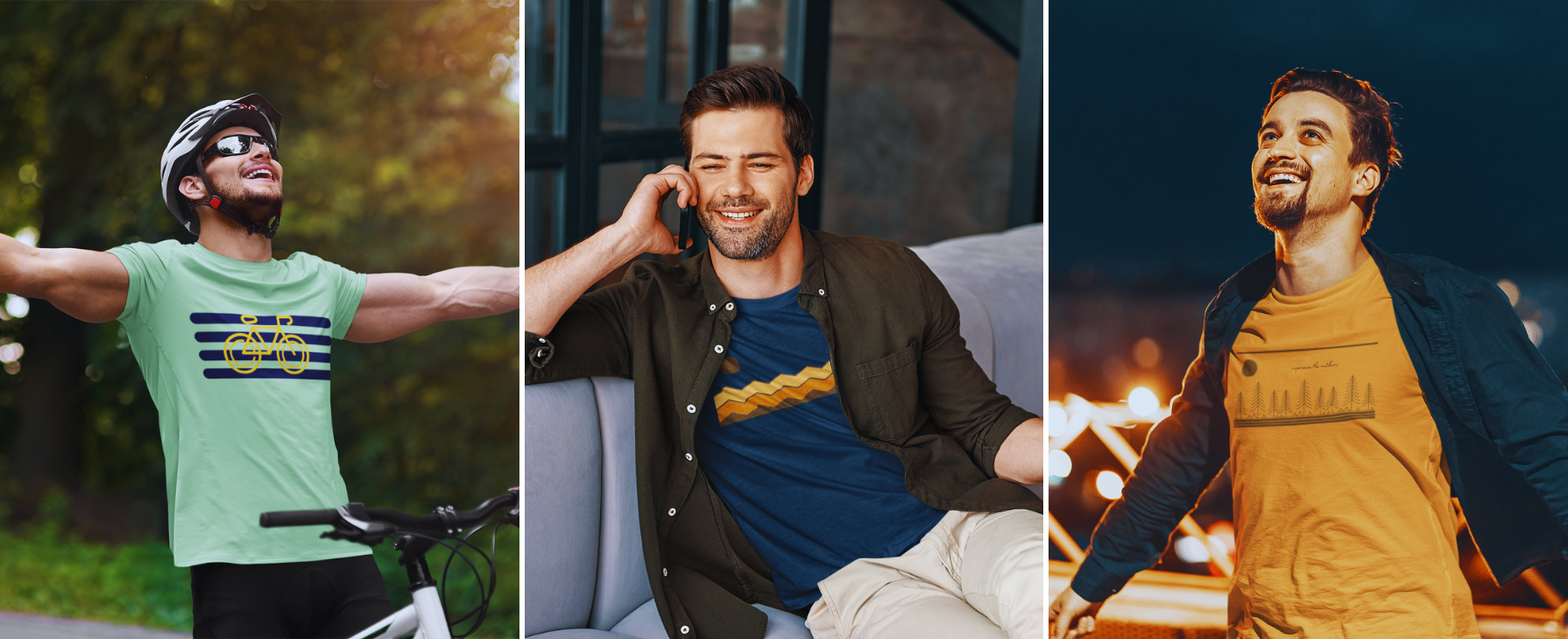
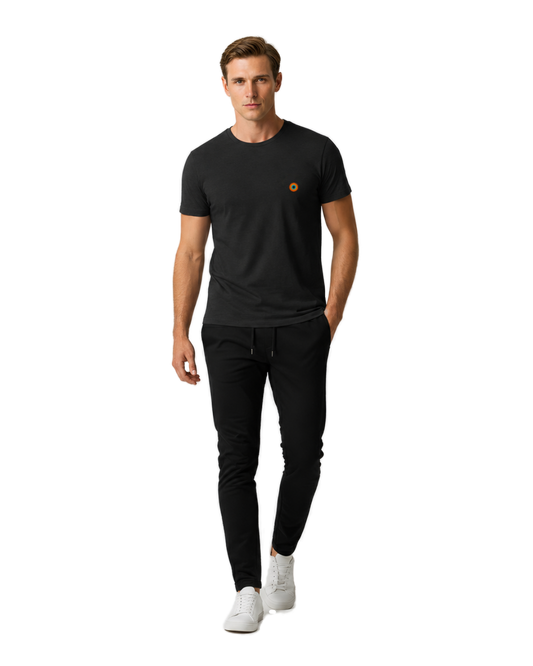
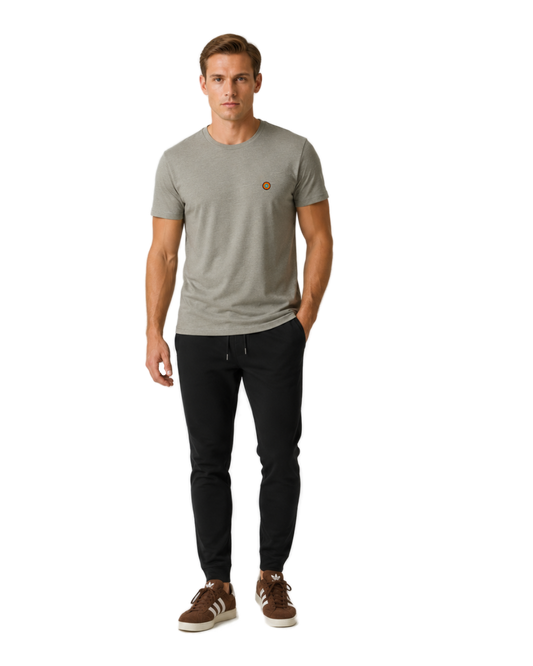
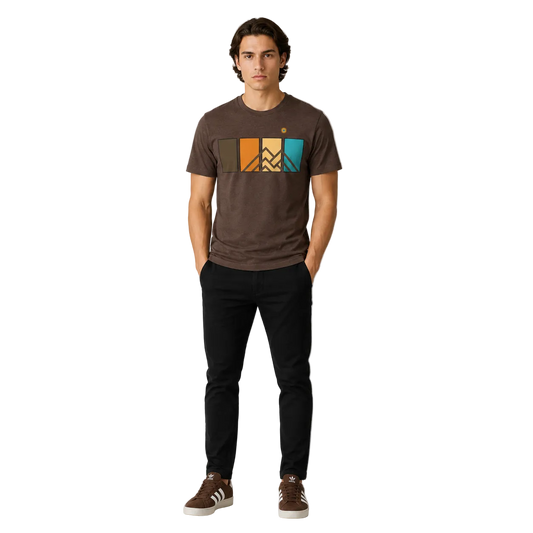
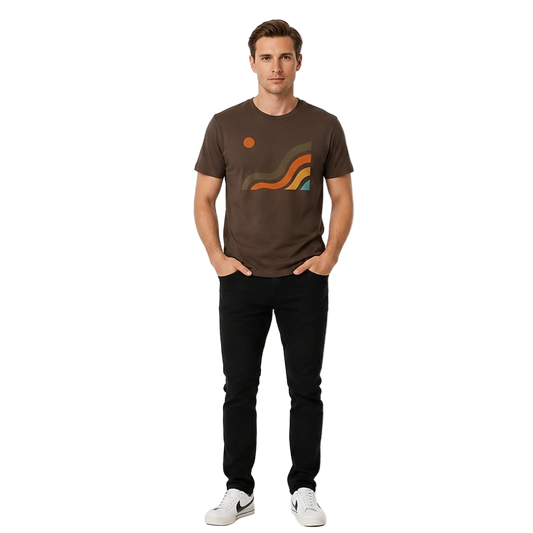
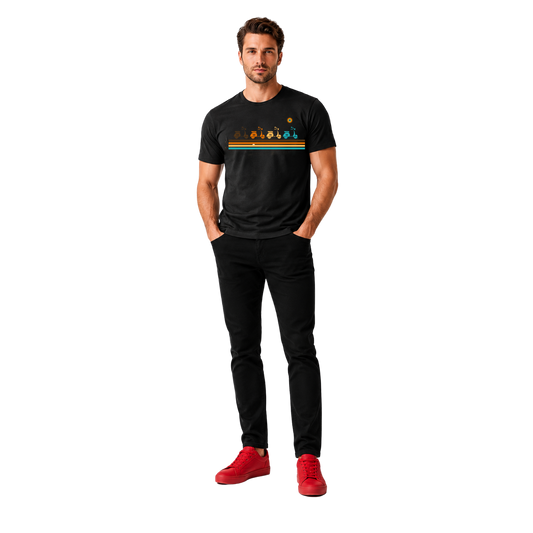
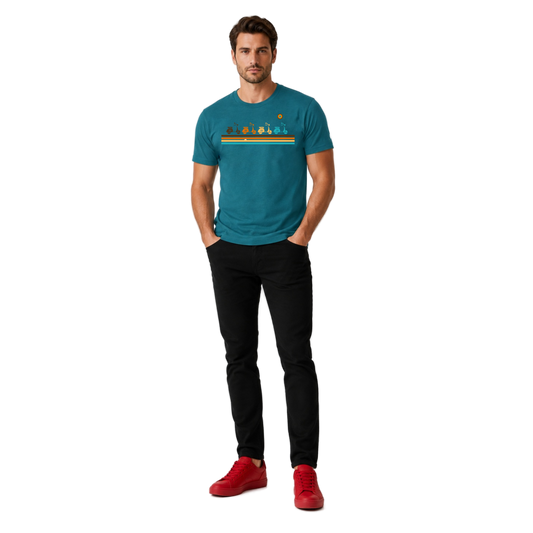
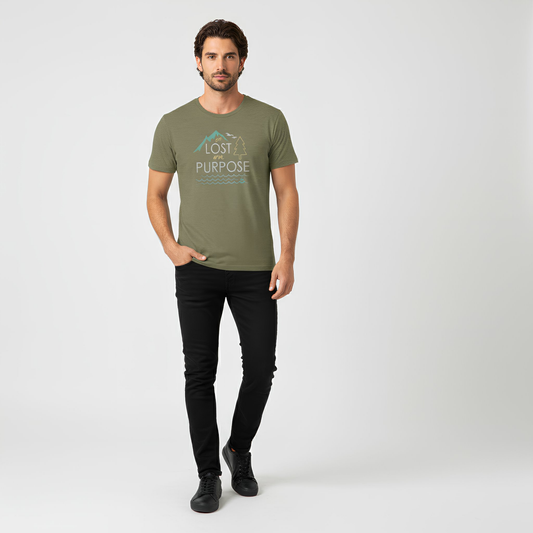
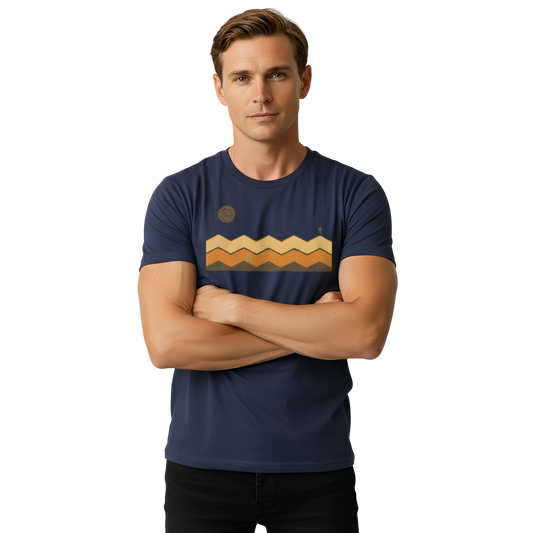
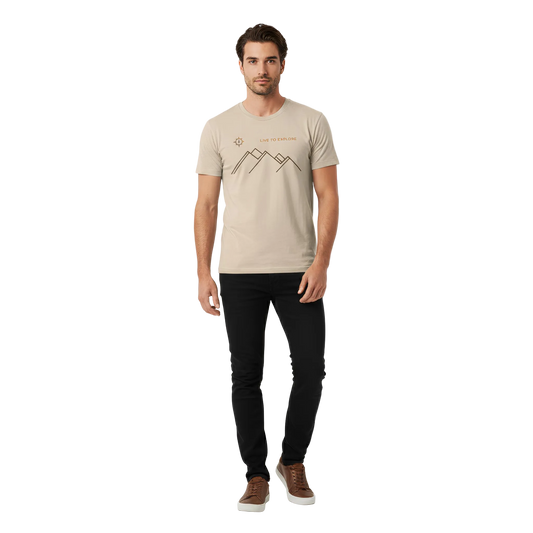
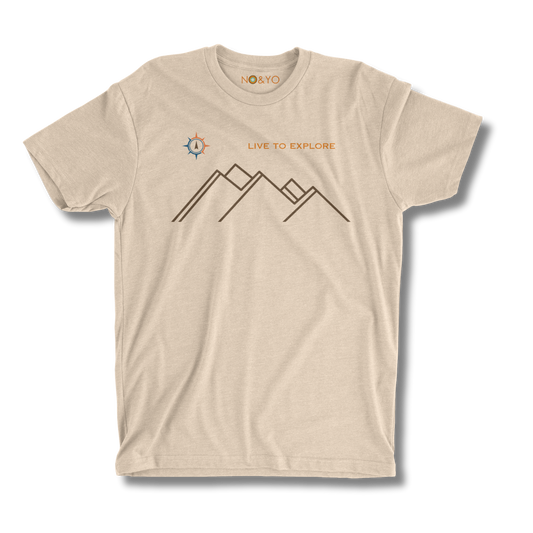
The NO&YO adventure tee was underneath it for the entire two days. Pre-washed, tagless, soft enough to sleep in and structured enough to wear at dinner in Antigua the evening before the ascent began. It was still presenting well on day three of the trip.
This is the NO&YO standard: gear that earns its place not by being noticed but by removing every reason to notice it.

The tee that was there for all of it. Built to disappear into the experience. Shop the NO&YO Adventure Tee Collection
The layer that held through the crater camp. Built for the threshold. Shop the NO&YO Midweight Hooded Pullover
Carrying It Back
The Experience pillar is not complete on the mountain. It completes when the man returns.
When the clarity found at altitude begins to apply itself to the life he came back to. When the decision he couldn't make before the trip makes itself on a Tuesday morning, without a meeting, without a consultant, without a framework. When the relationship he had been neglecting reasserts its importance with a clarity that wasn't available before. When the conviction he had been circling for months solidifies into something he can say out loud with certainty.
When his son asks him what the volcano was like and he thinks — actually thinks, not performing the thinking — and says: It was the hardest thing I've done in years. And on the way down I couldn't stop smiling.
His son is eleven. He files that answer.
The Experience pillar delivers in the terrain. It lands in the life.
The mountain stops being a mountain the moment a man realizes that what it produced in him is not a memory of a place but a permanent update to what he is.
That update is available to every man willing to follow the belief into the exploration and the exploration into the terrain.
Get lost on purpose.

Where the experience was always pointing. The Voice that follows. How the Man Who Got Lost on Purpose Found His Conviction
Frequently Asked Questions
WHAT DOES ADVENTURE ACTUALLY DO TO A MAN — BEYOND THE PHYSICAL?
At the physical level, demanding adventure recalibrates the body's model of what it is capable of. At the psychological level, genuine resistance in a significant landscape shifts the reference point for what registers as difficult — with effects that carry into professional decision-making, relationship quality, and the man's relationship with his own uncertainty. The research is consistent: the qualities most associated with effective leadership — clarity under pressure, comfort with ambiguity, sustained effort past the point of easy motivation — are precisely the qualities that demanding physical experiences develop. Not as a side effect. As a direct result.
HOW DO I KNOW IF AN ADVENTURE EXPERIENCE HAS BEEN GENUINELY TRANSFORMATIVE?
The clearest signal is not how you felt on the mountain. It's what changed in the three weeks after you came home. The transformative experience shows up not in the quality of the photographs but in the quality of the decisions made, the conversations had, and the relationship with difficulty that the man carries into his ordinary life. If the trip produced nothing that showed up in the life that followed, the threshold was not crossed. The most valuable experiences almost always involve a moment of genuine uncertainty about whether continuing was the right choice — and the decision to continue anyway.
IS VOLCÁN ACATENANGO ACCESSIBLE FOR SOMEONE WHO ISN'T A SERIOUS CLIMBER?
Yes, with preparation. The ascent requires sustained cardiovascular fitness and mental willingness — it is demanding but not technically difficult. No climbing equipment is needed. The trail is steep and the altitude is significant, but the challenge is primarily about sustained effort and the decision to keep moving when stopping becomes attractive. A man who has been maintaining reasonable fitness — trail running, cycling, consistent gym training — will complete the ascent. The NO&YO Guatemala Adventure Guide includes specific preparation recommendations for the Acatenango two-day itinerary.
WHY DO HIGH-PERFORMING MEN NEED PHYSICAL ADVENTURE SPECIFICALLY?
Because the competence they have built is almost entirely cognitive and operates in controlled environments. Physical challenge in uncontrolled terrain offers something that professional achievement cannot: genuine resistance that the man cannot manage, optimize, or talk his way through. The body must do the work. The threshold must be crossed in real time, with real consequence. This produces a kind of update to the self-model that is not available through any other means — and that shows up in the professional and personal domains in ways that even the man himself cannot always fully account for.
HOW DOES THE NO&YO EXPERIENCE PILLAR CONNECT TO THE FULL FOUR-PILLAR JOURNEY?
The Experience pillar is the third stage of the NO&YO journey: Believe, Explore, Experience, Voice. A man begins with an internal conviction — the unnamed pull toward something real. He follows it into Exploration, testing the belief against genuine terrain and resistance. The Exploration delivers the Experience — not just memories but transformation. A permanent update to who he is and what he is capable of. And from that transformed place, he finds his Voice: the earned conviction that speaks clearly because it was forged in something that cost him something. The Experience pillar is where the journey becomes irreversible.
CONTINUE THE JOURNEY
→ That Feeling You Can't Name — Where the belief that led to the mountain began
→ Guatemala Wasn't on the Plan — The exploration that produced this experience
→ How the Man Who Got Lost on Purpose Found His Conviction — The Voice pillar — where the experience lands
→ NO&YO Guatemala Adventure Itinerary Guide — The 10-day itinerary. $4.99.
→ Shop the NO&YO Collection — The gear that earns its place by disappearing







Comments
No comments
Leave a comment
Your Email Address Will Not Be Published. Required Fields Are Marked *
0 comments