






Guatemala Wasn't on the Plan — That's Why It Changed Everything
Guatemala Wasn't on the Plan — That's Why It Changed Everything
A man follows a pull toward a country he doesn't fully understand. What he finds there is not what he was looking for. It is better.
BY THE NO&YO EDITORS · 9 MIN READ · PILLAR: EXPLORE

The itinerary said Antigua. Three days, then on to the coast. That was the plan — clean, manageable, sensible. The kind of plan you make when you've decided to go somewhere but you're still a little afraid of what going there actually means.
He had the accommodation booked. He had the NO&YO Guatemala guide open on his phone. He had a rough sense of what the days would look like and a flight home that gave him enough time to do everything he'd told himself he came for.
By the second morning, the plan was gone. Not because anything went wrong. Because something went right — so far right that the original plan looked thin by comparison.
That's how Guatemala works. You arrive with a structure. The country replaces it with something more interesting. And the man who is willing to let it — who follows the Explore pillar all the way into genuine uncertainty — comes back with something that has no equivalent in the life he left.
The belief that brought him here started long before the booking. That Feeling You Can't Name — And Why You Should Stop Ignoring It
Why Guatemala
Guatemala is not the obvious choice. It doesn't have the infrastructure of Costa Rica or the brand recognition of Mexico. It requires more research, more flexibility, and more willingness to move through a country that operates largely on its own terms.
These are precisely the qualities that make it right for the man whose internal pull has been pointing somewhere genuinely challenging. Guatemala doesn't perform for tourists. It simply exists — in its volcanic highlands, its deep colonial history, its markets that have been running since before the Spanish arrived, its lake that sits at 1,562 meters inside a caldera and catches the light in the early morning in a way that has been described thousands of times and still manages to arrive as a surprise.
The man who felt the pull toward Guatemala was not wrong about it. He may not have been able to explain what he knew. But he knew.
The direction came before the destination. This is what the first step looks like. You Don't Need a Reason to Go — You Need a Direction

Day One: Arriving in Antigua
The city announces itself in cobblestones and color. Spanish colonial architecture in ochre and terracotta, crumbling in exactly the right places. Volcán de Agua visible from almost every street corner — a presence that doesn't let you forget where you are, what this landscape is capable of, or how long it has been here without needing your approval.
The first afternoon is not for plans. It's for walking. Finding the mercado by smell rather than GPS. Eating something you can't identify at a counter where the menu is handwritten and nobody speaks your language and the coffee arrives already sweetened and is perfect anyway.
Getting lost on purpose — which in a city this manageable means being found by something better than your original destination.
— DAY 1, 4PM — ANTIGUA
He turned right when the guide said left. Three minutes later he was in a courtyard behind a wooden door that had no sign, a woman selling textiles from a folding table, bougainvillea climbing the wall above her. He bought nothing. He stayed for forty minutes. It was the best forty minutes of the trip so far and the trip had only started.
The Explore pillar is not about having the right plan. It is about being present enough when the plan changes to recognize what arrived in its place.
The 10-day itinerary that built the structure for this trip. NO&YO Guatemala Adventure Itinerary Guide — $4.99
The Volcano: Where the Explore Pillar Does Its Deepest Work
Volcán Acatenango. 3,976 meters. A two-day ascent with a crater camp at 3,700 meters and, if the timing is right, a direct sightline to Volcán de Fuego erupting at eye level approximately every twenty minutes through the night.
The NO&YO Guatemala guide rated this as the centerpiece of the 10-day itinerary. He almost skipped it. It felt like too much — too ambitious, too physically demanding, too far outside the version of the trip he'd been imagining.
He went anyway. Because the pull that had brought him to Guatemala in the first place had not once pointed him toward the comfortable option.

THE ASCENT — WHAT THE BODY LEARNS
The first three hours are manageable. Dense cloud forest, loose volcanic soil underfoot, the trail narrow enough that passing requires coordination. The pack is heavier than it should be — he overpacked, which he won't do again.
The fourth and fifth hours are different. The tree line drops behind. The terrain opens into a vast volcanic moonscape. The air thins noticeably. The legs, already hours into the effort, begin to have opinions about continuing.
This is the threshold every meaningful climb has: the point where the man who came for the view weighs his options, and the man who came for what the climb produces keeps walking.
He kept walking.
"Some landscapes don't change your perspective. They change the resolution at which you see everything else."
THE CAMP AND THE ERUPTION
The crater camp at 3,700 meters is sparse in the way that earns the word: a flat clearing, tents anchored against wind that arrives without warning, Volcán de Fuego visible across the valley like something from a geological textbook brought to life. The eruptions come every fifteen to twenty minutes. Each one sends a column of ash and incandescent rock several hundred meters into the air.
He sat at the tent entrance at 2am watching it. The meeting he'd been anxious about before he left — the one that had been taking up significant bandwidth for three weeks — he attempted to locate in his memory and couldn't find it. Not as avoidance. It had simply become, temporarily, irrelevant. What was in front of him was too real.
— 3AM, CRATER CAMP, ACATENANGO
The temperature is six degrees. He is in the NO&YO midlayer over his tee, sleeping bag pulled to his waist, watching Fuego erupt for the fourteenth time. The sound arrives three seconds after the light. He hasn't checked his phone in sixteen hours. He doesn't miss it.
The summit at dawn — the view extending south over the Pacific, north over the highlands, Fuego still active below — is the kind of thing that a man tries to describe afterward and cannot. Not because the words don't exist, but because the experience was not primarily visual. It was physical and internal and permanent in a way that photographs do not capture and language does not contain.
This is the Explore pillar at full depth. Not the view. The version of himself he found on the way to it.
This is what the climb delivers — and why it lasts. The Moment the Mountain Stopped Being a Mountain
Lake Atitlán: The Water That Doesn't Ask for Permission
The descriptions of Lake Atitlán are so consistent — three volcanoes, extraordinary light, a quality of stillness that is difficult to find anywhere else — that a man arrives already defending himself against them. And then he gets there and discovers that the descriptions were not exaggerating. They were simply inadequate.
At 1,562 meters inside a volcanic caldera, Atitlán operates on a different time than the towns around it. The morning light on the water at 5:30am, before the tourist boats start, before the market vendors set up, before the day arranges itself into the familiar structure of activity — that light, on that water, surrounded by those peaks, is one of the genuinely rare things left in the world.
He took a boat to San Marcos La Laguna. Ate breakfast on a rooftop that looked directly at three volcanoes. Ordered a second coffee. Sent exactly one email — to say he wouldn't be checking email. Stayed an extra two days.

"The lake doesn't care that you came a long way to see it. That indifference is part of what makes it worth the journey."
The full Atitlán itinerary — which village, which boat, which morning. NO&YO Guatemala Adventure Itinerary Guide — $4.99
Tikal: The Jungle That Was Here Before Everything
Tikal in the Petén jungle of northern Guatemala is one of the largest and best-preserved Mayan archaeological sites in existence. It is also, if you arrive before the tour groups at 7am, one of the most extraordinary places on earth to spend a morning.
The jungle noise is the first thing. Dense, layered, alive in a way that a man who has spent most of his life in cities finds genuinely arresting. Howler monkeys in the canopy. Birds of a kind he cannot name. The sound of something moving in the undergrowth that turns out to be nothing threatening and is somehow more unsettling for it.
Temple IV rises 65 meters above the jungle floor. From the top, the canopy extends in every direction, broken only by the tops of other temples emerging through the green. The morning mist sits at mid-canopy. Everything below the mist is invisible.
He stayed until the first tour group arrived at the main plaza. Then he walked back through the jungle on a secondary path the guide had marked, found a ceiba tree with roots spreading twenty meters in every direction, sat at the base of it for thirty minutes, and thought about his sons.
— DAY 8, 6:15AM — TIKAL, TEMPLE IV
The mist is still in the canopy. He can hear the howler monkeys from somewhere to the north. The jungle below is invisible. He is the only person on the platform. He has been awake since 4:30am and is not tired. He is thinking about the fact that his eldest son is twelve and will be able to do this trip in six years. He is already planning to bring him.
The father who explores builds something his children carry forward. How the Man Who Got Lost on Purpose Found His Conviction
What the Exploration Validated
The pull toward Guatemala — vague, unexplainable, two years in the making — turned out to have known something that the man who felt it couldn't have articulated in advance.
It knew he needed terrain that operated on different terms than the ones his regular life ran on. It knew he needed the specific combination of physical resistance and cultural depth that Guatemala offers in a form that is available almost nowhere else at this price point, this accessibility, or this level of genuine challenge.
It knew that the clarity he had been attempting to manufacture through productivity systems, coaching frameworks, and strategic planning sessions was available, freely and without ceremony, somewhere between the volcanic scree on the Acatenango ascent and the pre-dawn silence on the shore of Atitlán.
The exploration confirmed what the belief had suspected. He came back different. Not loudly different. Quietly. In ways that took three weeks to fully surface — and that, once they did, turned out to be exactly the rearrangement he had needed for longer than the two years the pull had been running.
"The exploration doesn't give you the answers. It gives you the silence in which the answers you already had become audible."

WHAT HE BROUGHT BACK
• A decision about his business he'd been circling for six months — made on the descent from Acatenango, without a consultant, without a meeting, without a framework
• A conversation with his eldest son about difficulty, effort, and the specific satisfaction of keeping going past the point where stopping seems reasonable — a conversation he'd been meaning to have for two years
• A relationship with discomfort that had been permanently recalibrated — what now registers as hard in his professional life is measurably different from what registered as hard before the volcano
• The Finland guide already downloaded. The next belief already forming.
What the trip actually gave him — and why it lasted. How the Man Who Got Lost on Purpose Found His Conviction
What to Wear: The NO&YO Guatemala Kit
Guatemala presents three distinct climate zones across the 10-day itinerary, each with different demands. The highlands run cool to cold — temperatures below 10°C on the Acatenango ascent and on Atitlán mornings. The lowland jungle at Tikal runs hot and humid. The colonial cities sit in a middle register that shifts significantly between day and evening.
The packing principle that makes this trip work is the same one that makes any multi-climate adventure possible: invest in fewer pieces, chosen to work across more contexts. A man who packs for every specific scenario ends up carrying a bag that becomes a logistical burden before he's through customs.
THE GUATEMALA-SPECIFIC KIT
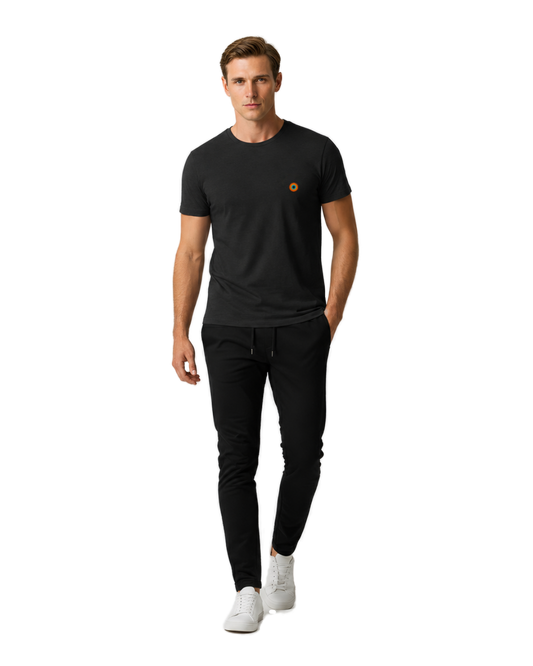
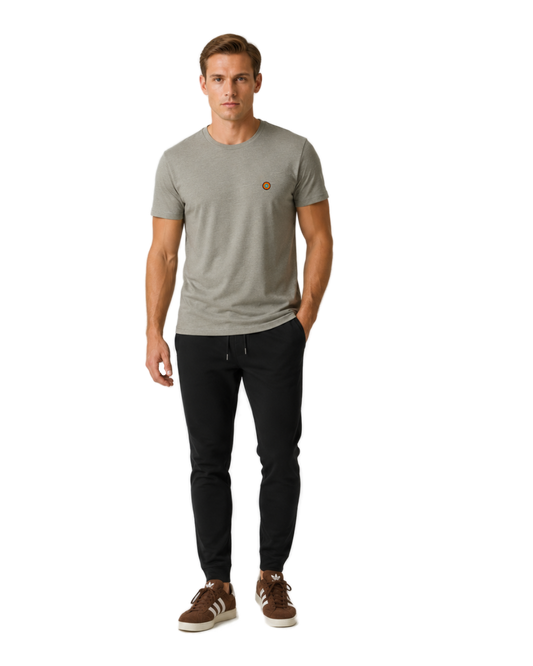
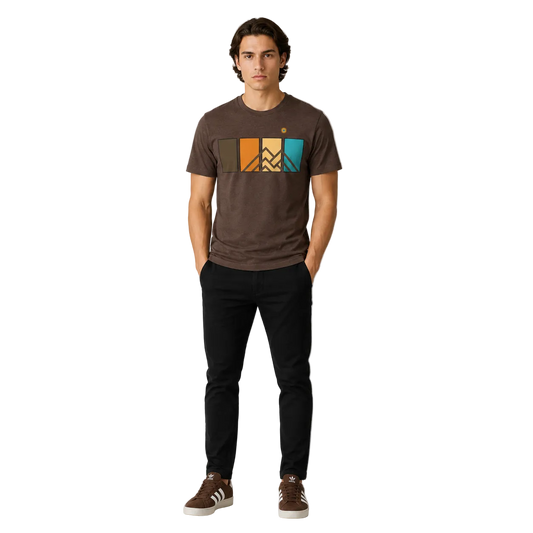
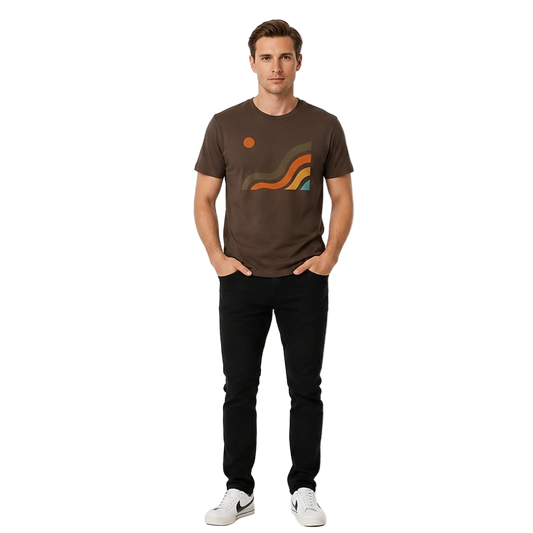
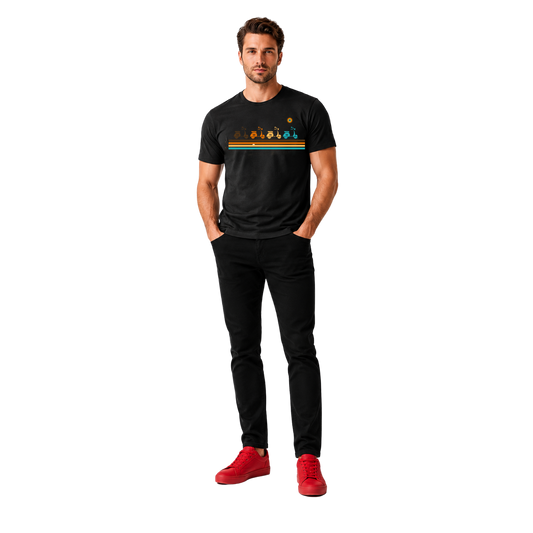
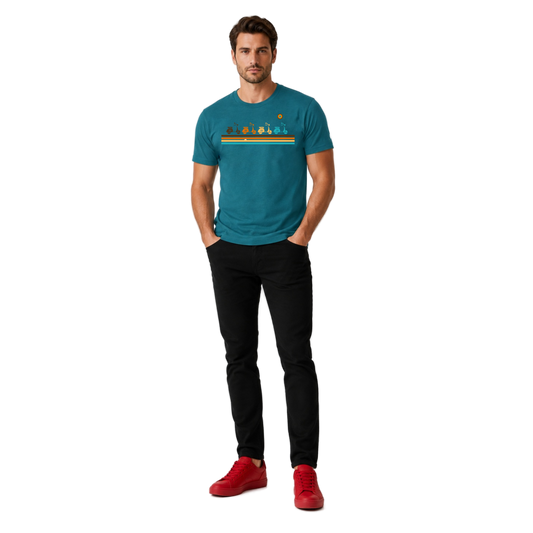
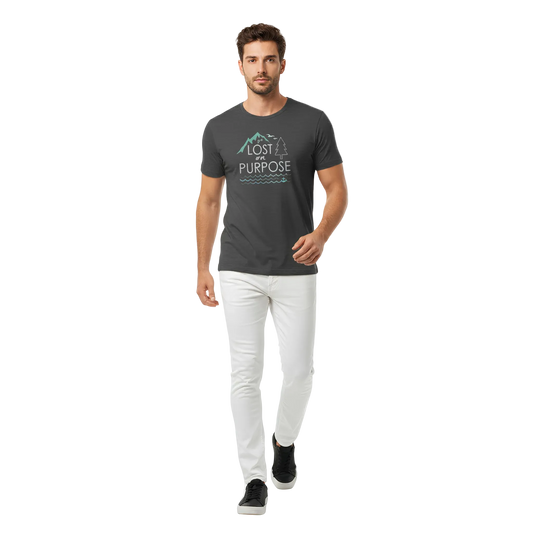
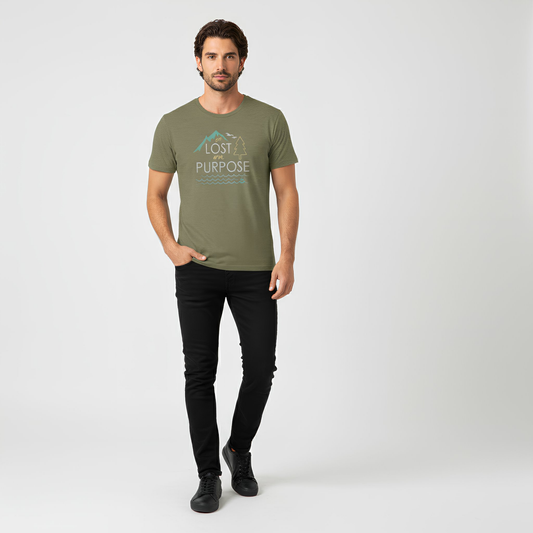
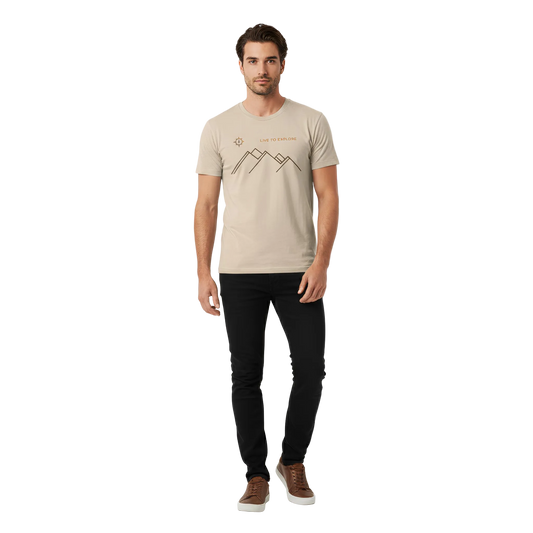
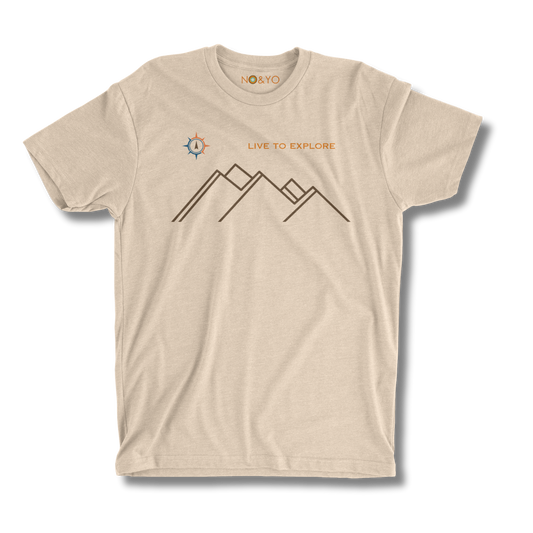
• 2 NO&YO adventure tees — buttery soft, tagless, pre-washed. Rotate daily. Both handle trail and dinner without a wardrobe change. Neutral colors that don't show volcanic dust as a catastrophe.
• 1 NO&YO midweight hooded pullover — non-negotiable for Acatenango nights, Atitlán mornings, and highland evenings. The piece that makes the temperature range manageable without carrying two layers.
• 1 lightweight technical shirt or relaxed button-down — for the colonial city evenings and the one dinner that calls for slightly more intention than the trail tee provides.
• 1 versatile technical pant — dark, clean cut, handles the jungle path and the Antigua restaurant with equal composure.
• 1 pair trail runners — for the volcano, the jungle paths, the cobblestones. One shoe. Not two.
• 1 compact 22–25L pack — everything fits. Nothing is checked. You move at altitude.

The tee that was there for every moment of this trip. Shop the NO&YO Adventure Tee Collection
The NO&YO Guatemala Itinerary Guide
Everything in this post — the Acatenango ascent and crater camp, the specific villages on Atitlán, the Tikal entry strategy, the secondary jungle paths, the colonial city neighborhoods worth walking and the ones worth skipping, the transport logistics between departments, the packing notes calibrated for each climate zone — is documented in detail in the NO&YO Guatemala Adventure Itinerary Guide.
It won't tell you what to discover. That part belongs to you. But it will make the first booking possible and the exploration coherent — from the moment the belief becomes a plan to the moment the man who followed it boards the flight home.
$4.99. The most valuable thing in the bag before anything else goes in.
Ten days. Every destination. One belief worth following. Get the NO&YO Guatemala Adventure Itinerary Guide
The Explore Pillar, Completed
He came back on a Sunday evening. His wife said he seemed lighter. Not happier, exactly — though he was that too. Lighter in the sense that something he'd been carrying had been set down somewhere between the crater rim and the descent. Something that had been occupying space for long enough that he'd stopped noticing the weight.
He didn't talk about the trip much at first. The most significant things take time to arrive. By the third week back, the changes were visible in ways he could point to — decisions made, conversations had, a recalibration in what registered as difficult that showed up quietly in everything that followed.
Guatemala was not on the plan. That was the point. The exploration that matters is almost never the one that was planned in advance. It is the one that was believed in advance — and followed into the terrain, the resistance, and the transformation that only the terrain can produce.
The Believe pillar told him to trust the pull. The Explore pillar gave him the place to take it. The Experience that followed changed something permanent.
The next belief is already forming. It's pointing north.
Finland is next.
Get lost on purpose.

The Experience that followed. What the exploration permanently changed. The Moment the Mountain Stopped Being a Mountain
Frequently Asked Questions
IS GUATEMALA SAFE FOR SOLO MALE TRAVELERS?
Guatemala, like any destination, requires awareness and preparation. The major tourist areas — Antigua, Lake Atitlán, Tikal — are well-established and manageable for the experienced independent traveler. The NO&YO Guatemala Itinerary Guide includes specific logistics, transport recommendations, and safety context for each region. The man who prepares with accurate, current information rather than generic fear will find Guatemala to be an extraordinary and accessible destination.
WHAT IS THE BEST TIME OF YEAR TO VISIT GUATEMALA?
The dry season runs from November through April and is generally considered optimal for the Acatenango ascent and the highland destinations. Lake Atitlán and the Pacific coast are accessible year-round. Tikal is best visited in the dry season when the jungle trails are more manageable, though the wet season brings a green density to the canopy that has its own extraordinary quality. The NO&YO guide includes seasonal notes for each destination in the 10-day itinerary.
HOW PHYSICALLY DEMANDING IS THE VOLCÁN ACATENANGO ASCENT?
Demanding enough to be meaningful. The ascent typically takes 5–7 hours depending on pace and condition, with significant elevation gain on loose volcanic terrain. The crater camp sits at 3,700 meters, where altitude will be noticeable. A man who has been maintaining reasonable cardiovascular fitness — trail running, cycling, gym training — will complete the ascent without technical difficulty. The descent the following morning takes 3–4 hours. No technical climbing equipment is required. The guide includes preparation recommendations and what to expect at each stage.
CAN THE GUATEMALA ITINERARY BE SHORTENED TO 7 DAYS?
Yes, with adjustments. The NO&YO guide is structured as a 10-day itinerary, but it is designed to be modular. A 7-day version would prioritize the Acatenango ascent, 2–3 days on Lake Atitlán, and 1 day in Antigua — sacrificing Tikal and the Pacific coast. For a first Guatemala trip, this is a viable and satisfying structure. The guide includes notes on which sections to prioritize if the itinerary needs to be compressed.
WHAT DOES THE NO&YO GUATEMALA ADVENTURE GUIDE INCLUDE?
A complete 10-day itinerary covering Antigua, Volcán Acatenango, Lake Atitlán (including specific village recommendations), Tikal, Laguna Brava, and the Pacific coast. Day-by-day structure with flexibility for deviation. Transport logistics between each destination. Accommodation guidance for each region. Packing notes specific to Guatemalan terrain and climate zones. Local insight beyond the standard tourist resources. $4.99. The most useful $4.99 the trip will cost.
CONTINUE THE JOURNEY
→ That Feeling You Can't Name — Where the belief that led here began
→ You Don't Need a Reason to Go — The first step from belief into movement
→ The Moment the Mountain Stopped Being a Mountain — The Experience pillar — what the climb permanently changed
→ NO&YO Guatemala Adventure Guide — Ten days. Every destination. $4.99.
→ Shop the NO&YO Tee Collection — The tee built for every moment of this trip








Comments
No comments
Leave a comment
Your Email Address Will Not Be Published. Required Fields Are Marked *
0 comments